







Can a heat pump keep up in a Rhode Island winter

Step 1 of 3: Equipment

A heat pump can keep your house warm through a Rhode Island winter, including the cold snaps when it drops into the teens or lower. Modern heat pumps are built to pull heat from outside air even when that air is cold, and the good ones hold their output down to near zero. What matters more than the cold itself is whether the unit was sized and installed for it. A heat pump that's too small for your house, or set up without backup heat for the coldest nights, will struggle and run constantly trying to catch up. One that's matched to your home and installed correctly will carry you through January the same way it carries you through October. If your system has been losing ground on the coldest days, that's usually a sign of the installation, not a sign the technology doesn't belong here.

A gray-haired man in a dark long-sleeve shirt sits on a gray sofa in a living room, looking toward a sunlit window with sheer curtains.
A gray-haired man in a dark green sweatshirt sits on a sofa in a living room, looking toward a bright window, with a houseplant, lamp, fireplace and framed art behind him.
A gray-haired bearded man in a dark green collared sweater sits on a sofa in a living room with a window, houseplant, floor lamp and bookshelves, looking off to the side.
A gray-haired man in a dark green sweater sits on a sofa in a sunlit living room, looking off to the side, with a framed landscape painting, dining table and shelving behind him.

How does a heat pump actually pull heat out of cold outside air?

You know a heat pump keeps running all winter, but the idea of it pulling heat out of air that's already cold doesn't quite make sense. If it sounds backward, that's because most people only hear about heat pumps moving heat, not how they actually get it out of air that feels freezing to you.

It uses refrigerant, not the air's temperature, to do the work

Refrigerant inside the outdoor unit is kept colder than the outside air, even on a 20 degree day. Since it's colder than the air passing over it, the refrigerant absorbs heat from that air, the same way a cold glass of water pulls warmth from a room. A compressor then squeezes that refrigerant, which raises its temperature further, and that heat gets carried inside and released through the indoor coil. The outside air never has to feel warm to you for this to work. It only has to be warmer than the refrigerant, which is why a heat pump can still pull usable heat out of a Rhode Island cold snap when the air outside is well below freezing.

  1. Cold refrigerant in the outdoor coil absorbs heat from the outside air.

  2. The compressor squeezes that refrigerant, raising its temperature well above room level.

  3. Hot refrigerant flows inside and releases heat through the indoor coil.

  4. A reversing valve switches the cycle direction when outdoor temperature drops low.

A woman with shoulder-length dark brown hair in a cream knit cardigan sits in an upholstered armchair beside a window, looking off to the side, with a white bookshelf and potted plant blurred behind her.
A woman with dark hair in a bun sits wrapped in a chunky knit blanket on a couch with a child resting his head on her shoulder, eyes closed, beside a lit lamp and bookshelf indoors.
A gray outdoor condenser unit on a raised pad beside a house with horizontal lap siding, with refrigerant lines, conduit and an electrical disconnect box on the wall, and shrubs on a mulch bed to the left.

Properly installed

A heat pump sized and set up right for your house keeps pace all winter, even on the coldest nights. The outdoor unit stays clear, the refrigerant charge is correct, and it was matched to how much heat your house actually loses. That's what lets it hold its output when it's 15 degrees outside.


An outdoor air conditioner condenser unit on a gray composite pad beside a house with horizontal lap siding, with refrigerant lines and a conduit running to a wall-mounted disconnect box, and a shrub at left.

Installed wrong

A heat pump that's undersized, low on refrigerant, or buried under snow and debris struggles long before the temperature drops that low. You'll notice it running constantly without warming the house, or the outdoor coil icing over and staying that way. Installation is what decides which one you end up with.

A weathered outdoor condenser unit on a concrete pad beside a house with white horizontal vinyl siding, with refrigerant lines and conduit running to a wall-mounted electrical box.
Before you get your heat pump installation
A gray outdoor heat pump unit with a large fan grille sits on a concrete pad beside a house with horizontal lap siding, next to a green shrub, mulch bed, and lawn.
After you get your heat pump installation

Send one request and you're done looking

A heat pump sized wrong for your house, or installed by someone who doesn't deal with Rhode Island winters often, is the difference between a system that holds 70 degrees in January and one that leans hard on its backup heat strip every cold snap. With power costing what it does here, that backup heat is the expensive part, and most homes around you are still heating with gas, so you don't have a lot of neighbors to compare notes with. The install is what decides whether your heat pump avoids that strip altogether or burns through it all winter. Getting that right means someone who has set up this equipment for other houses nearby, knows what Rhode Island cold actually demands of a heat pump, and can size it to your house rather than a guess. Send the request and one local contractor who does this work regularly takes it from there.

Every heat pump loses some capacity as the temperature outside drops, and the manufacturer's spec sheet shows exactly how much, often down to zero degrees or lower.

A unit sized off that data for your house holds its heat through a Rhode Island cold snap. One sized by guesswork runs its backup strips instead, and on expensive power, that's the difference you feel on the bill.

Power costs 29.48 cents per kilowatt-hour statewide

At that rate, every kilowatt your heat pump pulls on a cold night costs more here than almost anywhere else. Sizing and installation matter more because of it. A unit that leans on its backup strip too often runs up your bill fast, while one set up right keeps that cost down.

EIA-861 2025 statewide residential average

Where this leaves you

  • A heat pump sized and installed right holds your house at temperature through the coldest Rhode Island nights.
  • The equipment itself has the capacity to do it; whether your install delivers on that comes down to sizing and setup.
  • An installer who works on heat pumps in Rhode Island every winter knows which failure points show up in cold snaps here.
  • Matching you with one licensed local contractor means a single point of contact instead of a round of competing calls.
  • Getting the sizing and charge right the first time avoids a system that leans on backup strip heat all winter.
  • Where you stand now is simple: the technology works here, and the install is what decides whether yours does too.

A heat pump can carry your house through a Rhode Island winter, cold snaps included. Nothing above changes that. What decides whether yours actually does it is the install: the unit sized to how much heat your house loses, the charge set correctly, the outdoor unit placed where it can work. Get those right and the system holds 70 degrees without leaning on backup strip heat, which matters given what power costs here. Get them wrong and you've got a heat pump that technically works but runs up your bill every time it gets cold.

That's a sizing and setup problem, not an equipment problem, which is why who installs it matters as much as what gets installed. A contractor who works on heat pumps in Rhode Island winters, not just in theory but every season, already knows where these systems tend to struggle here and what to check before they call the job done. That's the contractor you get matched with: one licensed installer local to you, not a handful of companies competing for the work. You deal with one person who knows your situation, not a stack of callbacks to sort through.

The technology isn't in question. Heat pumps hold up in cold climates, Rhode Island included. What's left is making sure the one going into your house is sized for it and installed by someone who's done this before, in this state, in weather like yours.

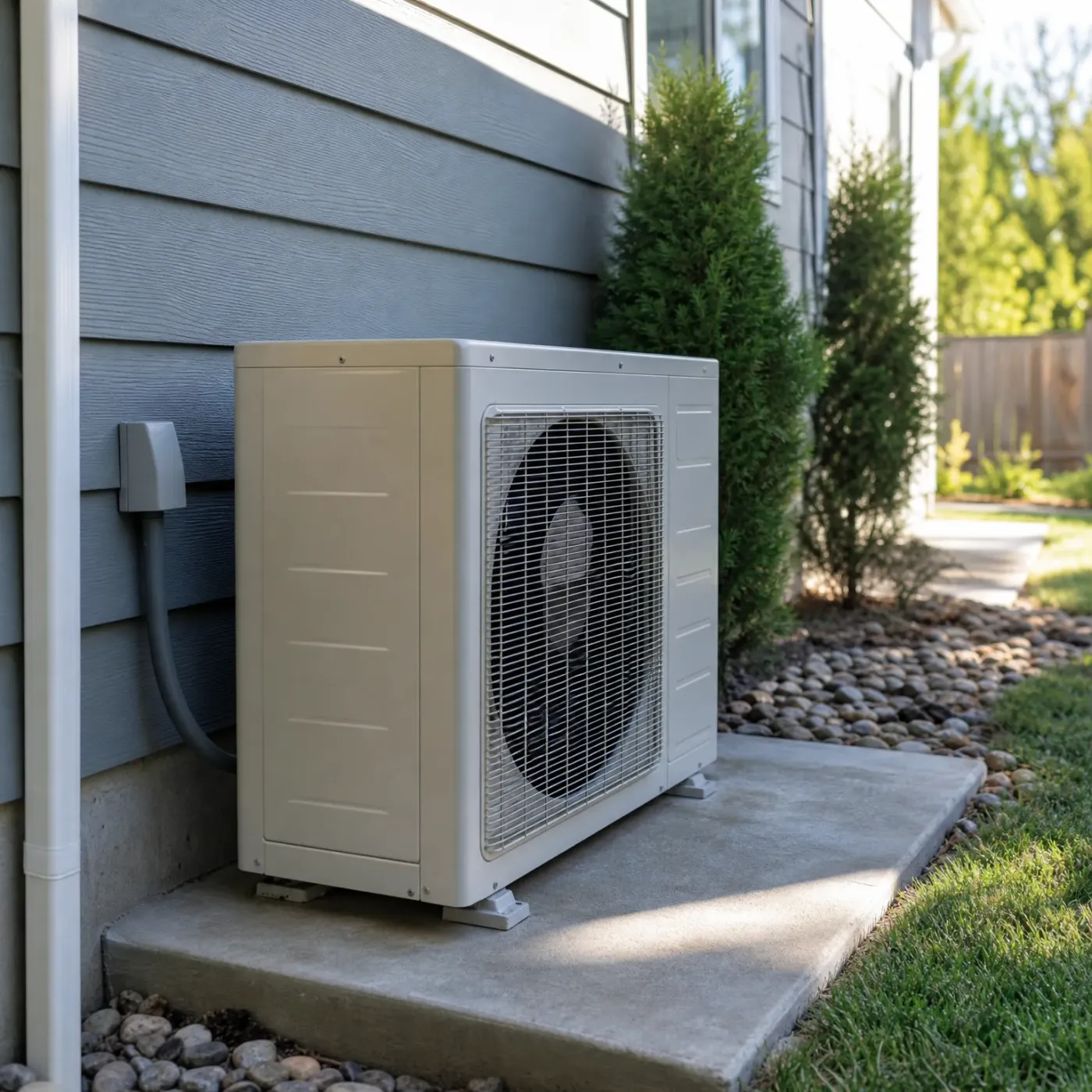
A beige outdoor heat pump or air conditioner condenser unit on a concrete pad beside a gray horizontal-siding house, with a disconnect box and conduit on the wall, shrubs, river rock and lawn nearby.

Finding a pro stops being your job

Find a local pro

Only one pro gets your request, so you hear from one company.

There's no charge for the request.