Profile view of a bearded man wearing a dark green baseball cap and a dark gray T-shirt against a plain light background.

How cold is too cold for a heat pump in Rhode Island

Step 1 of 3: Equipment

How cold is too cold for a heat pump in Rhode Island?

Rhode Island winters bring plenty of nights in the teens and below, and if you're running a heat pump, it's fair to wonder if it just stops working when it gets that cold out. You're not asking out of curiosity. You want to know if the house stays warm, or if you need something else carrying the load on the coldest nights.

Most heat pumps keep working down to 0°F or lower, but output drops off well before that

A heat pump pulls heat from outside air, and the colder that air gets, the less heat there is to pull. Older or lower-end units start losing real capacity somewhere around 25 to 30°F, and by the time it's in the teens, many are struggling to keep up on their own. Newer cold-climate heat pumps are built for this and can still heat a home efficiently down to 0°F or below. Since Rhode Island gets stretches of nights in the teens and sometimes colder most winters, the model installed matters more here than in milder states. If your current system isn't rated for real cold, that's the gap that shows up on the hardest nights, not a total shutdown, just a house that can't quite keep warm.

A light gray outdoor heat pump unit mounted on a concrete pad beside a house with horizontal lap siding, with refrigerant lines and conduit running to a wall-mounted electrical box, gravel and a leafy shrub nearby.

A heat pump holding its own

This is what a heat pump should look like through a Rhode Island winter: clean coil, clear airflow, nothing blocking the sides. Cold air pulls through it fine down into the teens. A unit kept clear like this can still pull heat out of outdoor air most nights you'll see here.

An outdoor air conditioner condenser unit on a concrete pad beside a house with horizontal siding, with conduit, cables and an electrical box on the wall and mulch beds at either side.

A heat pump losing the fight

Grime like this on the coil cuts how much heat the unit can pull from the air before it ever gets cold enough to matter. Below freezing, a dirty coil frosts faster and recovers slower, and on the coldest nights it may lean on backup heat sooner than it should.

A woman in a knitted shawl sits in a living room with a fireplace, shelves, a sofa with cushions, and a lamp by a bright window, looking off to the side.
A woman with long brown wavy hair in a green shirt over a white top stands in a living room with built-in white shelves, a ceiling fan, a potted plant and a sliding glass door.
A woman with shoulder-length gray-streaked hair in a light gray knit sweater stands smiling and looking off to the side in a living room with a sofa, houseplant, framed picture, and sunlit sliding glass door.
A woman with shoulder-length curly gray hair wearing a gray knit sweater stands near a window with a sheer curtain, looking to the side, with a blurred interior room behind her.

5 degrees and below

This is where most heat pumps lean hard on backup heat to keep up. A gas furnace or electric strip kicks in to carry the load the heat pump can't.

Reach a local pro

Backup heat costs more to run

Electric backup heat draws a lot of power, and Rhode Island electric rates are steep. A system sized and installed right limits how often backup heat has to carry the house.

Reach a local pro

Riding Out the Cold: Alone or With Backup

Heat pump only

  • Below 5 degrees, most heat pumps can't pull enough heat from the outside air to keep your home at the temperature you set.
  • The compressor keeps running, but the output drops, so rooms farthest from the air handler cool off first.
  • Ice can build on the outdoor coil faster than the defrost cycle clears it, which cuts output further on the coldest nights.
  • Running the heat pump alone through a hard cold snap means accepting a lower indoor temperature until it warms back up outside.
  • Without backup heat, recovery takes longer once a cold snap breaks, since the heat pump has to catch the house back up on its own.

Heat pump with backup heat

  • A gas furnace or electric strips pick up the load once the heat pump can't keep pace, so the thermostat setting actually holds.
  • The switchover happens on its own, so nobody has to notice the cold snap and go flip anything.
  • A furnace paired with the heat pump means most of the winter still runs on the heat pump, which costs less to run than gas on its own.
  • Electric strip backup works the same way but draws a lot of power, and that shows up on the bill given what Rhode Island charges per kilowatt-hour.
  • Sizing the backup right matters: too small and it can't cover the gap, too large and it short-cycles instead of running steady.
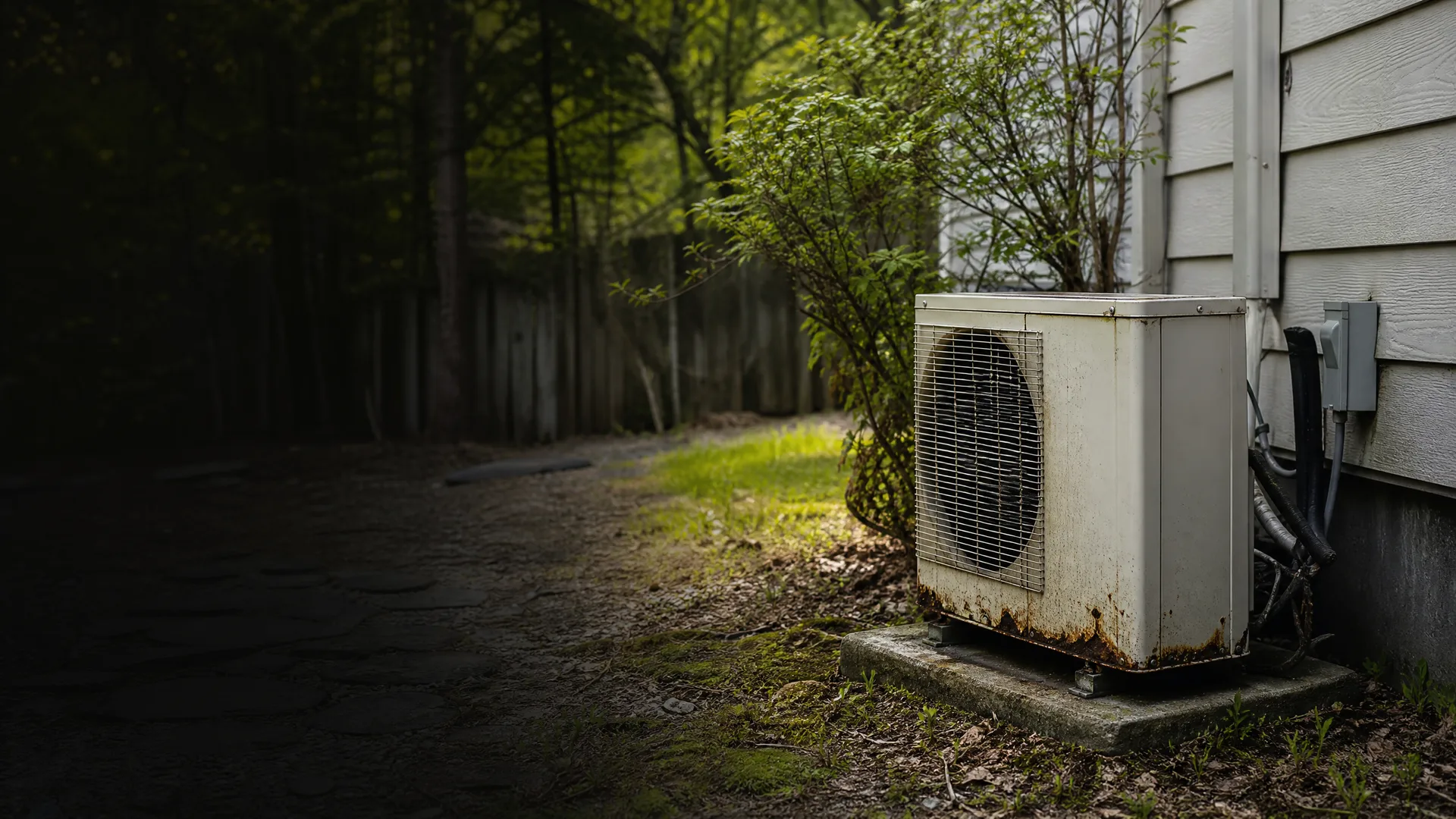
A weathered, rust-streaked outdoor heat pump unit on a concrete pad beside a house with horizontal siding, with shrubs, moss and a dim wooded yard and fence to the left.

You walk out to the side yard in March, coffee still in hand, and notice the unit has rust creeping up along its base where the snow sat against it all winter. The casing looks tired. You crouch down and give the fins a look, wondering if that's just surface rust or something underneath giving out too. It ran hard these past few months, through the teens and worse, and you never got around to asking anyone if it held up the way it should have. Calling a few places, explaining the rust, the age of it, waiting on callbacks, that's the part you keep putting off, even as you stand there deciding whether it's worth worrying about today.


Skip the search

If the unit outside your house is older, or if it was sized for a home with gas backup and that backup hasn't been checked in years, cold snaps are when it shows. You could spend an afternoon calling around Rhode Island contractors, explaining the rust, the ice buildup, the rooms that won't hold heat, then doing it again for the next company so you've got something to compare. Or you can hand that off. A local contractor who services heat pumps all winter in this state has seen what the teens and single digits do to these units season after season, and knows what to check first. You get one contractor looking at your system, not five competing for the job. That matters more in January, when the forecast says single digits and you want someone who already knows what a Rhode Island winter does to a heat pump, not someone learning on your house.

Replacing it versus backing it up

Some homes in Rhode Island keep the gas furnace as backup and let the heat pump handle the milder months, switching over when it drops low. Others have pulled the furnace out and lean on electric strip heat for those cold stretches instead. The first setup costs less to run on the coldest nights. The second costs more each time the strips kick in, since electric heat draws a lot of power and Rhode Island's rates are steep. If your furnace still works, keeping it as backup is usually the cheaper path through January.

An older unit versus a new one

An older heat pump, especially one sized for a home that leaned on gas backup most of the winter, may not pull much heat once it drops into the teens. Refrigerant charge drifts, coils get less efficient, and the compressor has to work harder for the same output. A newer cold-climate unit holds its output further down the thermometer and leans on backup heat less often. If the one outside your house was installed years ago and you're noticing rooms lag behind on cold mornings, that gap between what it used to do and what it does now is worth having a local contractor look at before next winter.

A woman and a child wrapped together in a thick knitted blanket on a sofa, both with eyes closed, with a lit table lamp and houseplant in the dim background.
An older woman with gray hair in a bun and glasses, wearing a beige knit sweater, smiles while looking to the side in a warmly lit kitchen, with a loaf of bread on the counter in the foreground and a snowy scene outside the window.

A heat pump sized right for your home can still cover most of a Rhode Island winter on its own, with backup heat only stepping in on the coldest nights.

A heat pump sized too small, or installed without attention to how your home loses heat, leans on backup far more than it should, and your power bill shows it every month.

A weathered gray outdoor condenser unit sits on a concrete pad beside a house with horizontal siding, with refrigerant lines entering the wall at left and a mulched shrub bed at right.
Before you get your heat pump installation
A gray outdoor condenser unit on a concrete pad beside a house with horizontal lap siding, with an electrical disconnect box and insulated refrigerant lines on the wall, gravel in the foreground and a planting bed at left.
After you get your heat pump installation

Power costs 29.48 cents per kilowatt-hour statewide

At 29.48 cents per kilowatt-hour, every hour your backup strip heat runs on a cold night adds up fast. A heat pump sized right for your house leans on that backup less, which matters most right here in Rhode Island.

EIA-861 2025 statewide residential average

So that's the real answer: most heat pumps start losing ground around 5 degrees, and below that, backup heat is doing the work, not the heat pump. Whether that matters in your house comes down to how it was sized and installed in the first place. A contractor who works on heat pumps in Rhode Island all winter has seen which units hold up at 10 degrees and which ones start calling on backup heat at 30. That's the kind of thing you learn from doing this locally, season after season, not from a general checklist. When you ask for help here, it goes to one licensed contractor near you, not a handful of companies competing for your callback, so you're not stuck fielding calls and repeating yourself. You already know what your house feels like on the coldest night of the year. Now you know what's normal for the equipment, and what's worth a second look.

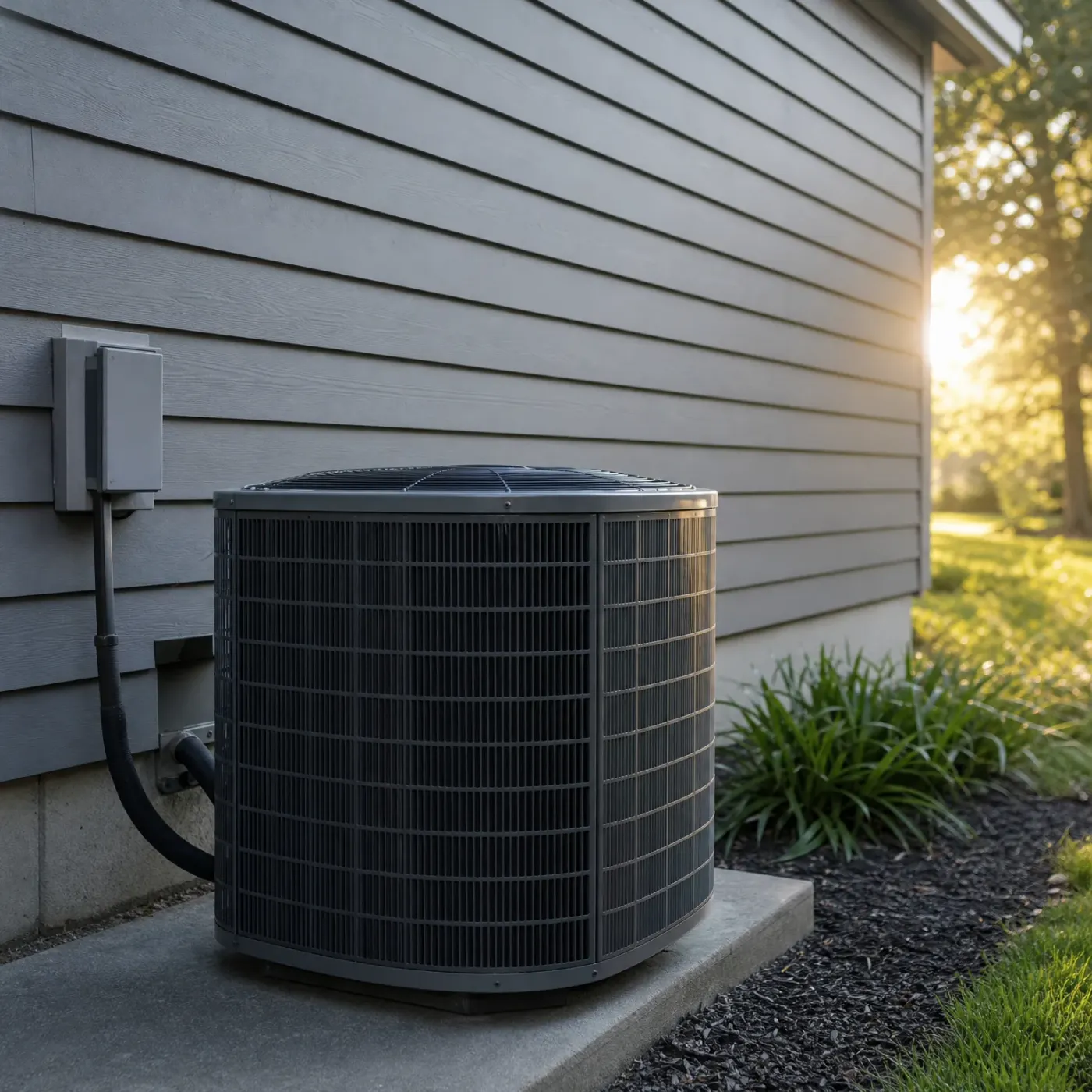
An outdoor air conditioner condenser unit on a concrete pad beside a gray horizontal-lap-sided house, with an electrical disconnect box and refrigerant line on the wall, grass, shrubs and a tree with low sun behind.

Explain it one time

Get one local pro

Your request stays with one local pro.

Asking costs nothing, and the choice to hire stays yours.