











How long heat pumps last in Rhode Island

Send the form and the search for an installer is over.

I'm done searching

A heat pump in Rhode Island typically lasts 12 to 15 years. The system works harder here than in milder climates because it runs double duty, pulling humidity out of the air all summer and then switching to heating mode for the cold months, often alongside a gas furnace as backup on the coldest days. That year-round load wears on the compressor and coils faster than a unit that only cools. Winters below freezing also mean more frequent defrost cycles, which add stress over time. How long yours actually lasts depends on how well it was sized and installed in the first place. A unit that is too big or too small for your home, or one with refrigerant lines that were not set up right, tends to fail years before its time. If your heat pump is approaching that 12 to 15 year mark, or struggling to keep up, it is worth having someone qualified look at whether it needs service or replacement.

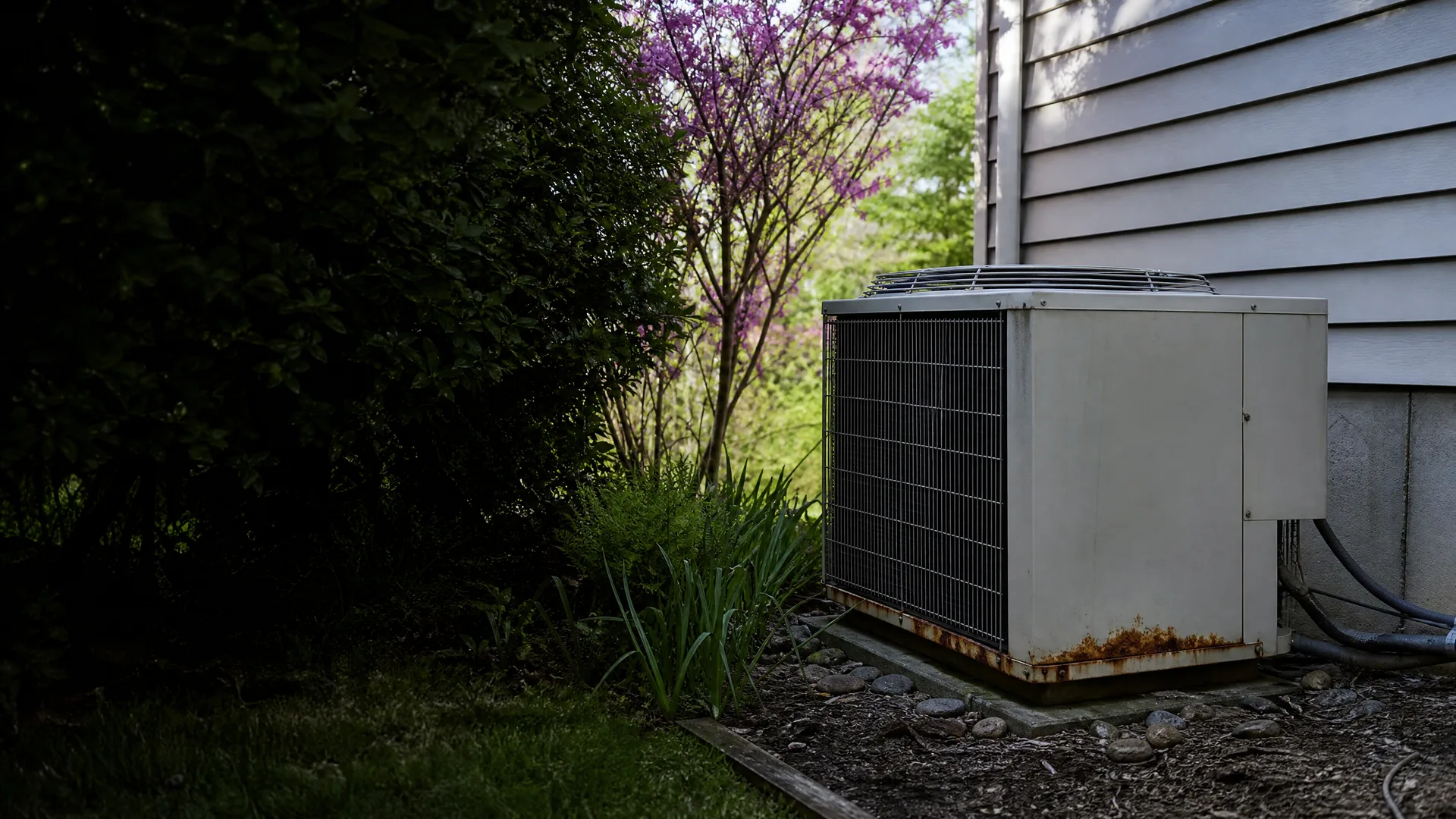
An outdoor air conditioning condenser unit with rust streaks sits on a concrete pad beside a light-colored lap-sided house, surrounded by shrubs, gravel and a flowering tree.

You're out in the side yard in April, coiling up the garden hose, and you notice the rust for the first time, a line of it creeping along the base of the outdoor unit. It's been sitting through thirteen Rhode Island winters, snow piled against it, salt air drifting in off the coast. The fan still kicks on. The line still hums. But the rust tells you something the thermostat doesn't, that the cabinet's been taking on moisture at the bottom for a while now. You crouch down and press a thumb against it. The metal gives, just slightly, soft in a way it shouldn't be.

A gray outdoor heat pump unit on a concrete pad beside a house with horizontal lap siding, with a conduit running to a wall-mounted disconnect box and a green shrub to the left.
A clean unit on a solid pad, running at 12 to 15 years old without a fight, tells you the refrigerant charge and electrical connections are still doing their job.
An outdoor air conditioning condenser unit with dusty coils sits on a concrete pad against light horizontal siding, with an electrical disconnect box and refrigerant lines on the wall and a shrub and mulch at left.
Years of grime and bare soil washing up against the cabinet trap moisture at the base, and that's where cold Rhode Island winters start the rust that ends a compressor early.

The reversing valve is what makes a heat pump different from a furnace or an AC unit. It switches the direction refrigerant flows, which is how one system gives you cold air in July and warm air in January. In summer, the compressor outside is doing the real work, running long stretches to wring humidity out of the air, which is harder on it than dry heat climates ever are. On cold mornings, you might notice the outside unit seem to pause or run strange for a few minutes. That's the defrost cycle, melting frost off the outdoor coil so it can keep pulling in heat. Because winters here get genuinely cold, most systems lean on a backup heat source rather than asking the heat pump to do it all alone. Both coils, indoor and outdoor, need air moving freely across them. Block one with leaves, snow, or a dirty filter and the whole system strains. A lot of compressor failures start small, with a capacitor that's worn down after one too many humid summers.

How a heat pump actually works

  • Every heat pump has a reversing valve, and it's the part that decides whether you get heat or air conditioning that day.
  • The outdoor unit holds a compressor that runs almost nonstop in a Rhode Island summer, since muggy air makes it work longer to pull moisture out.
  • A defrost cycle kicks in automatically on cold mornings, briefly running the system backward to melt frost off the outdoor coil before it switches back to heating.
  • Most heat pumps here pair with a backup heat source, since relying on the heat pump alone on the coldest nights can strain the compressor.
  • The indoor coil and outdoor coil both need clear airflow, and anything blocking either one makes the whole system work harder than it should.
  • A failing capacitor is one of the most common reasons a compressor struggles to start, especially after years of summer humidity.
A gray-haired man in a dark sweater sits on a light gray sofa in a living room, looking toward a sunlit window with trees outside.
A gray-haired man in a dark blue sweater sits on a light gray sofa in a sunlit living room, looking off to the side, with a potted plant, shelving unit, and large glass doors behind him.
A bearded man with graying hair in a dark green sweater sits on a sofa in a living room, looking off to the side, with a sliding glass door and a dim kitchen doorway behind him.
A gray-haired man in a dark knit sweater sits on a light gray sofa in a living room, looking toward a sunlit window, with houseplants, a lamp, and framed art in the background.

What double duty costs the compressor

That compressor doesn't get the long summer rest it would in a drier climate. Humidity here means longer run times, and a motor that's cycling on for most of a muggy July afternoon builds up heat and wear a dry climate system never sees. Then October comes and the reversing valve switches it into heating mode, where it keeps working through the cold months instead of sitting idle. A furnace in a gas-heated home runs hard for one season and rests for the other. A heat pump in Rhode Island doesn't get that rest, and that's the main reason 12 to 15 years is the honest range here instead of the longer numbers you'll see quoted for other parts of the country.

Why the install matters more here

A heat pump sized and charged correctly will hit that range without much drama. One that's undersized for your square footage, or set up with a refrigerant charge that's slightly off, works harder than it needs to from day one, and that shortens the compressor's life well before 12 years. Rhode Island's electric rates make this worse, because a system straining to keep up runs longer and pulls more power doing it. A contractor who installs these year-round in Rhode Island homes knows how to size the unit for the humidity load and get the charge right the first time, which is where most of the lifespan difference actually comes from.

An outdoor air conditioning condenser unit on a concrete pad beside a house with horizontal lap siding, with a green shrub to the left and a wide concrete slab in the foreground.
Before you get your heat pump installation
A gray outdoor condenser unit on a concrete pad beside a house with horizontal lap siding, with a wall-mounted disconnect box, conduit and insulated refrigerant lines, a shrub at left and gravel at right.
After you get your heat pump installation
A gray outdoor condenser unit of an air conditioner or heat pump sits on a concrete pad beside a house with horizontal lap siding, with a wall-mounted disconnect box and conduit above it, mulched beds, shrubs and grass nearby.

It's off your list after this

One installer gets your project, so there's no bidding war over it.

Send the form and stop researching installers for the new heat pump.

Hand it over

Asking costs nothing, and the choice to hire stays yours.

Is your heat pump actually struggling right now

Stand near the outdoor unit and listen. A rattle or a hard clunk when it starts is the compressor or fan motor telling you something's worn. Inside, a system that used to bring the house to temperature in twenty minutes now runs for an hour and still leaves a room warm in summer or cool in winter. You might notice the air coming from the vents feels barely different from room temperature, or the unit ices over in defrost mode and stays that way too long. None of this means it's done, but it means it's working harder than it should. Left alone through another Rhode Island winter, a struggling heat pump either fails outright on the coldest night or runs up your electric bill trying to keep pace, and power here isn't cheap to waste.

A gray outdoor condenser unit sits on a concrete pad against a house wall with horizontal siding above a stone veneer base, with an electrical disconnect box and conduit on the wall and a leafy shrub in mulch to the left.

Running clean

This unit sits clear of the shrub and the siding, up on its pad with room to breathe. A heat pump kept clean like this pulls air through the coil without a fight, which keeps the compressor from working past what it has to. That's what gets a system to 15 years instead of less.


An outdoor air conditioner condenser unit on a concrete pad beside a house with beige vinyl siding, with a gray electrical disconnect box and insulated refrigerant lines on the wall and river rock to the right.

Choked with debris

Those coil fins are packed with dirt, and the unit can't pull air through them the way it needs to. The compressor ends up running longer to do the same job, and in a Rhode Island summer that means more hours of strain on a part that's already working double duty. Left alone, that shortens the years you get out of it.

Power costs 29.48 cents per kilowatt-hour statewide

At 29.48 cents per kilowatt-hour, every extra year you squeeze out of a tired compressor shows up on your bill. An aging heat pump pulling more power to do the same job in a Rhode Island summer costs you more here than it would almost anywhere else.

EIA-861 2025 statewide residential average

A gray outdoor condenser unit sits on a concrete pad beside a house with horizontal lap siding, with a wall-mounted disconnect box and refrigerant lines, mulched beds and a shrub nearby, and a concrete walkway in the foreground.

Working the way it should

This unit sits clear on its pad, mulch kept back from the cabinet, the disconnect box dry and intact. Air moves through the coil without a fight, and the compressor cycles the way it was built to, through a muggy July and a cold February alike.

An outdoor air conditioner condenser unit on a concrete pad beside a light gray vinyl-sided house, with an electrical disconnect box and conduit on the wall and bare soil in the foreground.

Something's gone wrong

Nothing here looks out of place, but a heat pump this age can be failing where you can't see it. The refrigerant lines and disconnect box are doing their job today. Whether the compressor behind them still has years left is a different question, and one worth getting answered before it quits on you.

Repair the Heat Pump or Replace It

Repair

  • A single failed part, like a capacitor or a contactor, is a reasonable fix on a system still inside its 12 to 15 year run.
  • If the compressor itself is sound, replacing a fan motor or a circuit board gets you through another Rhode Island winter without a full swap.
  • A repair makes sense when the unit has been kept clean and clear, since that tells you the rest of the system isn't under the same strain.
  • Patching a system past year 12 often means the next part fails within a season or two, since the whole unit aged together.
  • A repair bill on an old unit still leaves you paying Rhode Island's electric rates for a compressor that's working harder to do the same job.

Replace

  • A heat pump installation resets the clock, with a compressor sized and charged correctly for your home from day one.
  • A new system runs on current refrigerant and current efficiency standards, which matters with Rhode Island's power costs working against you.
  • If the outdoor unit is rusted at the base or the fan has started rattling, those are signs of wear that no single repair reaches.
  • Installing now means a licensed local contractor who works on this equipment every season handles the sizing and setup, not whoever happens to answer a call.
  • Replacement makes sense once the system is cycling harder each summer just to keep up, since that strain only grows from here.
A two-story house with gray and light gray siding, white-trimmed windows and a white front door, flanked by deciduous trees, with a partly browned lawn in front under a clear blue sky.

NOAA's data for Rhode Island puts the summer dew point at an average of 61°F across June, July and August. That's sticky enough to feel on your skin the moment you walk outside, and it's the same moisture your heat pump has to wring out of the air before it can cool the house. The compressor and fan run longer stretches to do that than they would somewhere dry, and longer run times wear on the same parts year after year. You'll notice it as a system that cycles on more often in July and August than it does in May, and over thirteen or fourteen summers, that extra work adds up faster than the calendar alone would suggest.

NASA POWER T2MDEW county cells weighted by homes

A middle-aged woman with shoulder-length dark hair, wearing a gray cardigan over a cream top, sits in an upholstered armchair and looks toward a sunlit window, with a shelf holding framed pictures and a plant behind her.
A woman and a child wrapped together in a knitted gray blanket on a couch, with the child's head resting on her shoulder and a lit table lamp and houseplant in the background.

Where your heat pump stands now

  • A heat pump in Rhode Island runs 12 to 15 years when the compressor, coil and connections are kept clean and checked.
  • Rust, grime against the cabinet and a hard-starting compressor are the signs that your system is closer to the end of that range than the start.
  • A single worn part, a capacitor or a fan motor, is worth fixing on a system still inside that window.
  • A compressor straining to keep up costs more on a Rhode Island electric bill with every extra year it runs.
  • A licensed local contractor who services this equipment every Rhode Island summer and winter knows which of these signs means repair and which means replacement.
  • One contractor takes the call for your system, not several companies working the same lead.

Twelve to fifteen years is the range, and where your system falls in it comes down to what you've seen and heard from it. Rust at the base, grime packed against the cabinet, a compressor that struggles to start on a muggy morning: these tell you it's nearer the end than the start. None of that means a new system today. A capacitor or a fan motor worn out on a unit that's otherwise sound is a repair worth making, and it buys you real years, not a stopgap. What changes the math is a compressor that's straining, because that costs you more on a Rhode Island electric bill every summer it keeps running that way, on top of whatever the repair costs. The call on which it is, a part worth fixing or a system worth replacing, isn't one you have to make alone or from guesswork. A contractor who works on heat pumps through a Rhode Island summer and a Rhode Island winter has seen this compressor, this coil, this exact rust line before, and knows which one means another few years and which one means it's time. When you send the request through this page, it goes to one contractor, licensed and local to you, not a handful of companies competing for the same job. That's one call to take, one person who already knows the equipment common to houses around you, and one answer instead of a pile of quotes to sort through. Whichever stage your system is in, that's the part that's settled once the form is in.

A gray outdoor condenser unit on a concrete pad beside a house with horizontal lap siding, bordered by mulch, shrubs and a mowed lawn.

Stop chasing a heat pump pro

Step 1 of 3: Equipment




