Tell us about the job
Takes about a minute. No obligation.
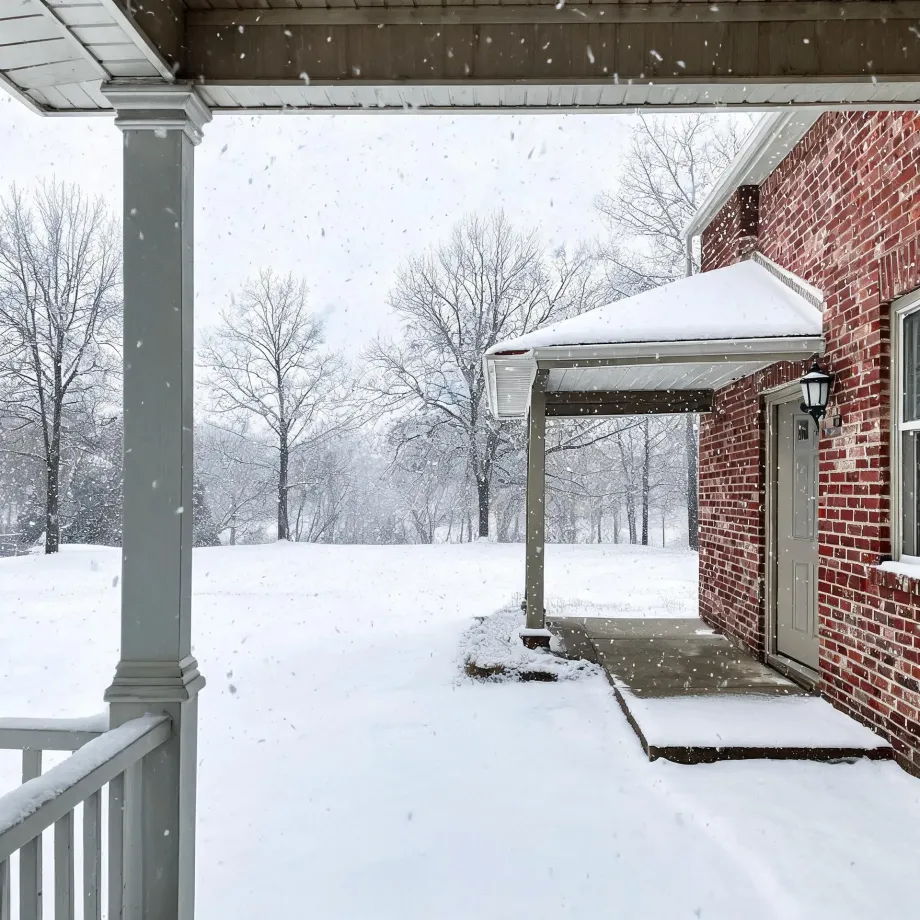
A heat pump earns its repair history on the heating side. Homes in Bristol County, RI run heat about eight months a year, from October through May. Through those months, the reversing valve cycles repeatedly as the unit switches between heating the house and running defrost, and the refrigerant circuit operates under the thermal stress that comes with sustained cold-weather extraction. When a contractor pulls a heat pump here for diagnosis, wear on the reversing valve and low refrigerant charge are the two conditions most likely to explain a system that is losing capacity or short-cycling. Those are the first things checked before the quote takes shape.

Ductwork in a house like this was put in for something that is not there anymore, and the heat pump running in it now arrived later, fitted to what already existed. Half the homes in Bristol County, Rhode Island were built in 1957 or earlier (2020-2024 ACS 5-year). When a repair opens that system, what the contractor finds inside determines whether the job is a parts swap or a longer search. Heat pump components sized and spec'd for older retrofit installations are not always in current supply chains, and a contractor working this county's stock checks parts availability early, before the scope of the repair can be quoted with any accuracy.
The Parts of a Heat Pump a Contractor Checks First
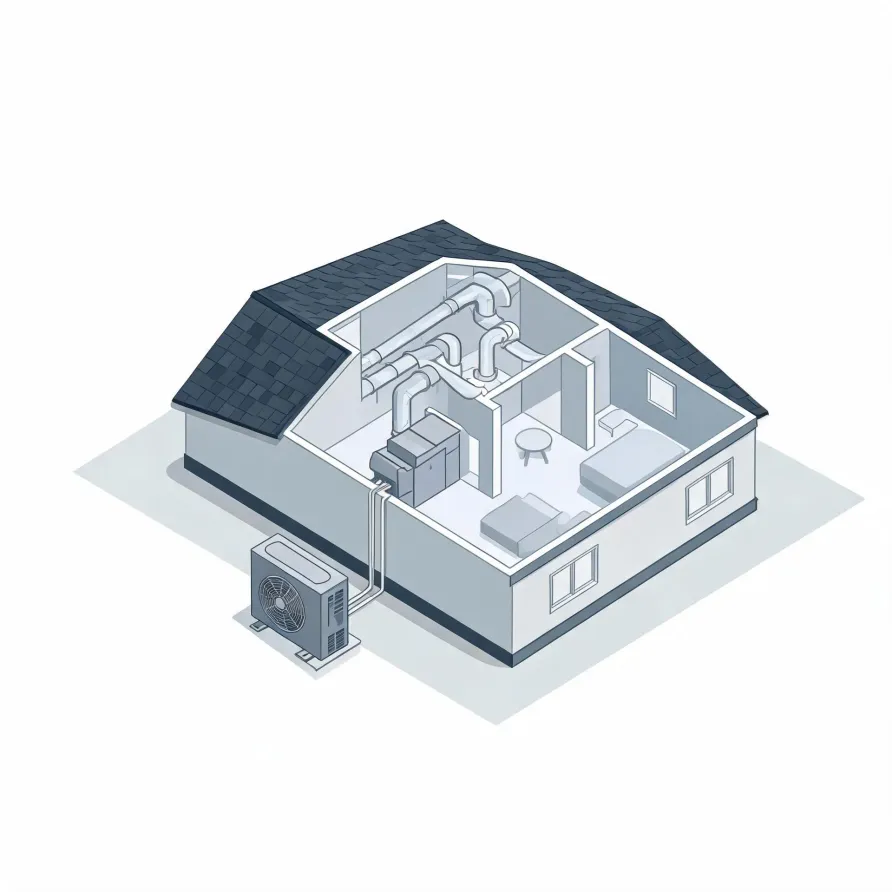
The outdoor unit sits outside the house and holds the compressor and condenser coil, which together move heat between the refrigerant and the outside air. When a heat pump stops heating or cooling, the compressor is one of the first things a contractor examines, along with the coil and the fan motor that pulls air across it.
The indoor air handler mounts inside, often in a closet, attic, or utility space, and pushes conditioned air into the home through the blower and evaporator coil. The refrigerant line set runs between the two units, and the reversing valve inside the system is what allows it to shift between heating and cooling modes. A fault in either can show up as the wrong temperature coming out of the vents.
The drawing shows a typical heat pump layout, and a licensed contractor determines which components and conditions apply to your specific home.
Find a contractor in Bristol CountyBristol County by the Numbers
55 severe weather events were recorded in Bristol County, Rhode Island between 2015 and 2024.
NOAA National Centers for Environmental Information, Storm Events Database, bulk CSV export, events 2015-01-01 through 2024-12-31.Half the homes in Bristol County, Rhode Island were built in 1957 or earlier (2020-2024 ACS 5-year).
U.S. Census Bureau, 2020-2024 American Community Survey 5-Year EstimatesBristol County, Rhode Island holds 21,615 housing units (2020-2024 ACS 5-year).
U.S. Census Bureau, 2020-2024 American Community Survey 5-Year EstimatesOwners occupy 71.8% of the occupied homes in Bristol County, Rhode Island (2020-2024 ACS 5-year).
U.S. Census Bureau, 2020-2024 American Community Survey 5-Year EstimatesCodes & Standards Covering Heat Pump Repair in Bristol County, Rhode Island2 sourced rules and standards
Licensing and Legal Requirements in Bristol County, Rhode Island
A Rhode Island master licensee needs no separate sheet metal licence while the air handling equipment is ten (10) tons or less, or the heating equipment does not exceed 250,000 BTUs; above either figure the sheet metal work must be subcontracted to a licensed sheet metal contractor.
Rhode Island requires a licence from the Department of Labor and Training to work in the mechanical trades: nobody may hold themselves out as a master, or advertise that they will install refrigeration and air conditioning or air distribution systems, without one.
Weather That Works Against Equipment in Bristol County
Heating and cooling equipment in Bristol County runs against conditions it was sized and installed to handle, and weather stress accumulates in ways that surface as repair needs. How hard that equipment works, and how often it fails, is shaped by local conditions.
55 severe weather events, 2015–2024. Source: NOAA National Centers for Environmental Information, Storm Events Database.